 01
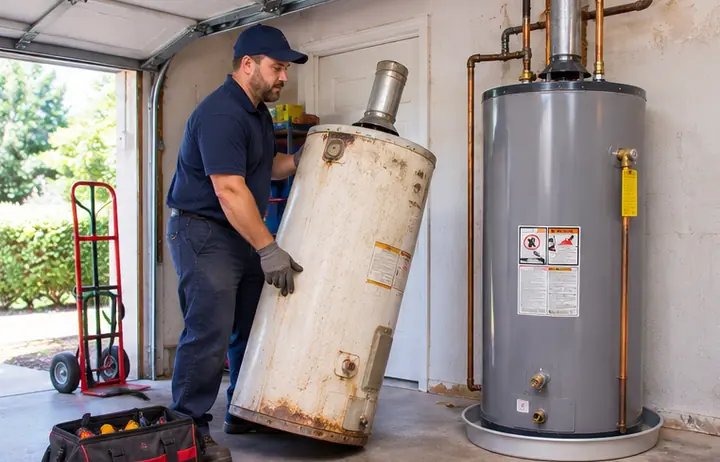
Water Heater Replacement
When an aging, severely corroded, or leaking heater is no longer a sensible repair candidate, replacement planning should consider tank capacity, fuel type, connections, and hot-water demand.
Learn About This Service →
Water Heater Repair Pros installs tankless water heaters for Georgia homes and businesses. Our team helps with system selection, sizing, conversions and installation requirements with clear guidance for each property.
Our technicians are licensed and insured. Installation availability, property requirements, scope and pricing are confirmed by our team.
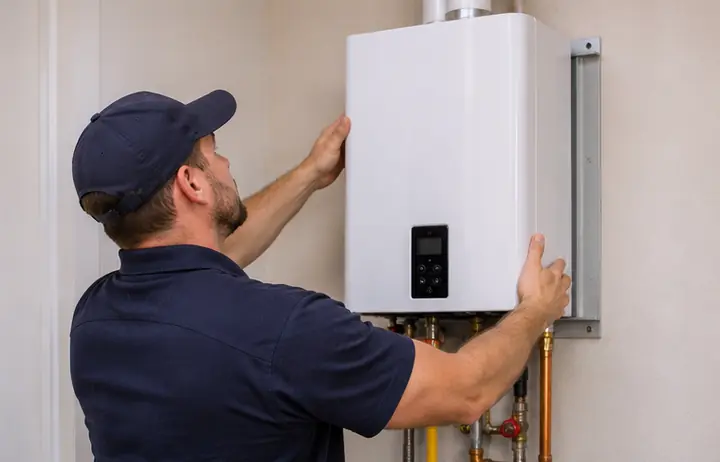
A tankless water heater heats water as it flows through the unit instead of keeping a large supply hot in a storage tank. It can be a practical option for some properties, but the right installation depends on actual hot water use and available utilities.
Tankless water heater installation in Georgia may mean installing equipment in a new home, replacing a worn on-demand heater, converting an existing storage tank, or adding a point-of-use unit for a particular fixture. Each project has a different combination of plumbing, fuel or electrical, venting and space requirements. Our team should assess the actual property before selecting equipment or establishing the final work scope.
Water Heater Repair Pros provides tankless water heater installation services for Georgia homes and businesses, including replacements and conversions from storage-tank systems. To discuss your project, have the property's Georgia ZIP code, current water heater type, and expected simultaneous hot water needs ready. If the problem is with an existing on-demand unit rather than a planned installation, see tankless water heater repair.
Tankless equipment may suit properties that want a compact system or an alternative to stored hot water. Compare benefits with capacity limits, utility changes, installation costs and how far hot water must travel to the fixture.
On-demand heaters avoid continuously storing a large volume of hot water. Some models have compact wall-mounted designs and can reduce storage standby losses. Actual energy use and operating costs depend on the system, installation and household habits.
A tank heater stores ready-to-use hot water and its first-hour rating is useful when comparing models. Tankless equipment is selected for continuous flow capacity at a given temperature rise, not by tank gallons.
A tankless model has a maximum heating capacity, so several showers or appliances operating at once can exceed its output. Some fixtures may not provide enough flow to activate certain units, and changing equipment may require upgrades.
A conversion may be reasonable when the existing tank needs replacement and the property supports the required fuel, electrical, venting and space changes. Compare the complete project rather than equipment price alone.
A tankless system does not automatically deliver hot water to distant taps instantly. Plumbing distance and circulation design still affect how long a user waits. Ask the installer to explain performance expectations for your property rather than assuming one system suits every home.
Different on-demand water heaters have different equipment requirements. The selection should start with actual demand and the available utility service rather than choosing by brand or a headline efficiency claim alone.
Natural-gas and, where available, propane-fired systems use a burner and heat exchanger. Fuel capacity, combustion air, safe exhaust routing and model-specific clearances are central to planning.
Electric systems heat with electrical elements and may need substantial dedicated circuit capacity, especially for whole-home demand. A qualified professional must review the service and equipment requirements.
These serve multiple fixtures from a central installation point. The actual mix of showers, sinks and appliances used together determines the flow and temperature-rise requirements.
Smaller systems may serve a specific sink or limited application. They still require suitable plumbing and electrical connections, and their capacity should not be mistaken for a whole-home rating.
In homes with several bathrooms, a single tankless system may or may not meet all simultaneous demand. The right answer depends on actual flow, inlet temperature and equipment specifications.
Tankless sizing is based on two connected numbers: gallons per minute (GPM) of water required at one time and the temperature rise needed to reach the desired hot-water temperature. Both matter. A unit advertised with a high flow rate may supply fewer gallons per minute when the incoming water is colder and more heating is required.
Identify showers, sinks, dishwashers and other hot-water uses that may run at the same time. Use actual fixture data when available rather than assuming every property has the same demand.
Compare the coldest relevant incoming-water temperature with the required hot-water setpoint. The installer should account for Georgia conditions at the property and the equipment manufacturer's performance chart.
Find a model that can provide the needed GPM at the calculated temperature rise. Confirm whether the required gas or electric capacity and location are realistic.
For example, a home running two showers together needs enough flow for both while the heater raises incoming water to the chosen output temperature. A listed maximum GPM at a smaller temperature rise is not proof that the unit can meet that demand in every season.
The U.S. Department of Energy's tankless water heater sizing guidance explains why temperature rise and peak flow need to be considered together. Ask our team to show how the proposed unit matches those requirements.
Installing a tankless system can involve more than attaching a box to the wall. An evaluation of existing services and manufacturer requirements helps prevent performance problems and unsafe installations.
Gas tankless heaters can have different input demands from the old storage heater. The gas meter, regulator, pipe sizing and other gas appliances must be assessed by qualified personnel before selecting equipment.
Electric whole-home tankless systems may require multiple dedicated circuits and significant available electrical capacity. Gas tankless models also may need a suitable electrical supply for controls and ignition.
Applicable gas-fired equipment requires manufacturer-approved air intake and exhaust arrangements, safe terminal locations and clearances. Venting that was suitable for a storage heater cannot simply be assumed suitable for a new on-demand model.
Connection locations, water pressure, line sizing, shutoff/service valves and possible recirculation arrangements affect installation. The installer should consider household demand and access for future service.
Certain high-efficiency condensing gas models produce condensate that must be managed according to equipment requirements. Condensate drains or neutralization may be relevant depending on the system and installation.
Not sure whether your existing gas or electrical setup can support a tankless unit? Describe the property and current heater when calling.
Call About Tankless InstallationSwitching from a storage tank to an on-demand system is not always a direct swap. The property may need new venting, gas-line sizing, electrical work, a different mounting location, or changes to the hot- and cold-water connections.
Start with the tank's location, current fuel source, available power, plumbing access and the household's peak hot-water demand. The old heater's gallon capacity does not directly translate into a tankless unit's GPM requirement.
A qualified member of our team can identify whether the proposed equipment meets hot-water needs without exceeding existing gas or electrical capacity. If the current tank itself is failing, the water heater replacement page explains broader replacement decisions.
The work may include safely removing the tank, installing a suitable mounting surface, rerouting connections, completing approved venting and, where needed, upgrading supporting utilities. Local permitting and inspection arrangements should be confirmed before work proceeds.
Also consider what happens if simultaneous demand exceeds capacity and how long hot water travels through existing pipes. Switching equipment alone does not necessarily solve long wait times at remote fixtures.
The sequence varies by property and equipment, but a properly planned installation starts with assessment and ends with checks that the unit operates safely at the expected demand.
Discuss current hot-water problems or goals, assess the existing connections and equipment location, and confirm the water-demand pattern that the new system needs to handle.
Select equipment using GPM, temperature rise and the actual utility configuration. Identify mounting, plumbing, gas, electrical, venting or condensate work before scheduling installation.
Where applicable, remove or isolate old equipment, establish the mounting location and complete approved utility connections. The scope can be different for a new property and a tank conversion.
The installer verifies appropriate operation, water temperature, flow, leaks, ignition or electrical performance and relevant venting or drainage requirements, depending on the equipment.
Ask our team what the proposed installation includes and which arrangements are handled by the installer versus other qualified trades or authorities. Do not treat a generic online sequence as instructions for unqualified DIY gas or electrical work.
Installation costs can differ substantially even for the same tankless model. The main variables are the equipment and capacity selected, the condition of the existing site and the supporting work needed to install it correctly.
Fuel type, intended demand, condensing design, output capacity and equipment features influence the selected model and its cost.
Gas line or meter limitations, new circuit requirements or electrical service changes can add specialized work.
A different exhaust route, approved materials, combustion-air requirements or terminal placement can affect a gas system installation.
Water-line changes, relocating equipment, service valves and difficult physical access affect installation complexity.
Removing an existing storage tank and converting its connections is different from placing a new heater in a prepared location.
Applicable jurisdictional procedures and the need for multiple trades can affect the overall job scope. Details vary by location and project.
A phone description can help identify the type of project, but it is not a reliable final installation price. Before authorizing work, ask our team how the proposed equipment, scope, charges and any necessary approvals will be explained. Water Heater Repair Pros does not publish unverified statewide flat installation prices.
Tankless systems heat water when needed and can avoid storage standby losses. That does not mean every home will save the same amount, or that hot water use becomes unlimited. The result depends on model efficiency, fuel costs, demand, plumbing arrangement and installation quality.
Compare efficiency claims for the actual model, the home's use pattern and local utility costs. Capacity and performance at the needed temperature rise are just as important as efficiency ratings.
Mineral buildup may affect heat-transfer surfaces. Maintenance needs depend on the water, equipment and manufacturer instructions; some systems need periodic filter inspection and descaling.
Consider safe access to water shutoffs, service valves, filters, venting and condensate connections. Keeping model and service information available helps with later professional maintenance.
For care of an existing tankless unit, review our water heater maintenance and flushing and tankless repair information. An installer can also explain the model-specific maintenance schedule before the job is completed.
Water Heater Repair Pros provides tankless water heater installation services for Georgia homes and businesses, including new systems, replacements and tank-to-tankless conversions. Our plumbing team is licensed and insured; the right installation approach depends on your hot-water demand, available fuel or electrical supply and property details. Contact us to discuss availability.
Call (833) 423-3192 with your Georgia ZIP code, existing water heater type, preferred fuel source and expected hot water demand. Our team can discuss installation or tank-to-tankless conversion options and explain next steps.
Do not see your city? Browse the complete Georgia Service Areas directory or call with your street address to discuss local service availability.
Considering a tankless upgrade? Have your current heater information and simultaneous water-use needs ready so our team can discuss installation options.
Call About Tankless InstallationOutput depends on the model’s capacity and the temperature rise required. The same heater generally supplies fewer gallons per minute when incoming water is colder or several fixtures need hot water at once. A professional can compare peak demand with the manufacturer’s performance chart.
Often, but a conversion can require changes to gas supply, electrical capacity, venting, plumbing, mounting or drainage. The property and equipment must be evaluated before the scope is confirmed. Replacing an old tank is not necessarily a direct like-for-like installation.
Neither is automatically better. Gas and electric models differ in output, utility needs, installation requirements, operating costs and suitability for simultaneous demand. The choice should reflect fuel availability, electrical capacity and how much hot water the property uses.
The answer depends on the exact model and its manufacturer instructions. Electric tankless models can require substantial dedicated electrical capacity; gas-fired units also may require appropriate electrical power for controls. Have a qualified professional review the existing setup.
Equipment capacity and fuel type, required gas or electrical upgrades, new venting, plumbing modifications, access, tank removal and applicable permit or inspection requirements can all affect the total project. Our team must review the scope before giving a reliable price.
It can if the selected model provides enough flow at the required temperature rise for those simultaneous showers and any other hot-water uses. An undersized unit may not maintain the requested temperature when multiple fixtures run together.
Compare related water-heater services or return to the Georgia water heater repair homepage for information about an existing hot-water problem.
01When an aging, severely corroded, or leaking heater is no longer a sensible repair candidate, replacement planning should consider tank capacity, fuel type, connections, and hot-water demand.
Learn About This Service →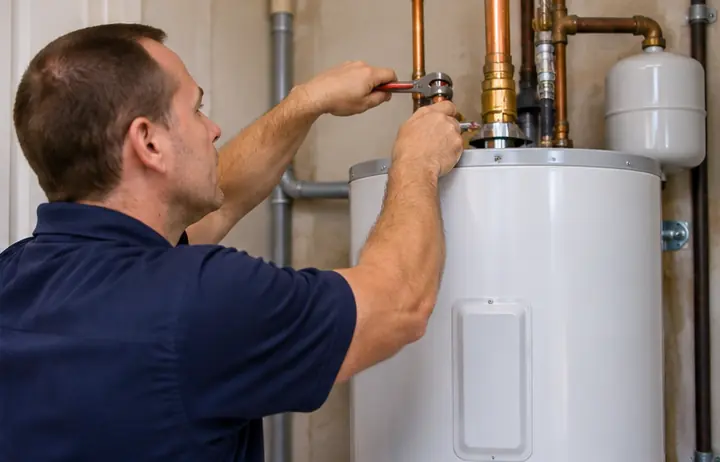 02
Installation for a new property, a renovated space, or a different equipment setup requires appropriate sizing, location planning, and checks of the available plumbing and utilities.
Learn About This Service →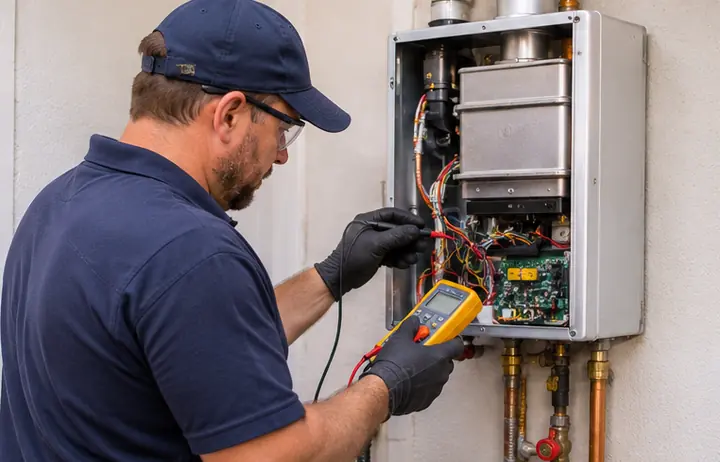 03
On-demand water heater problems may involve flow sensors, mineral buildup, error codes, ignition, controls, or other model-specific faults that need careful diagnosis.
Learn About This Service →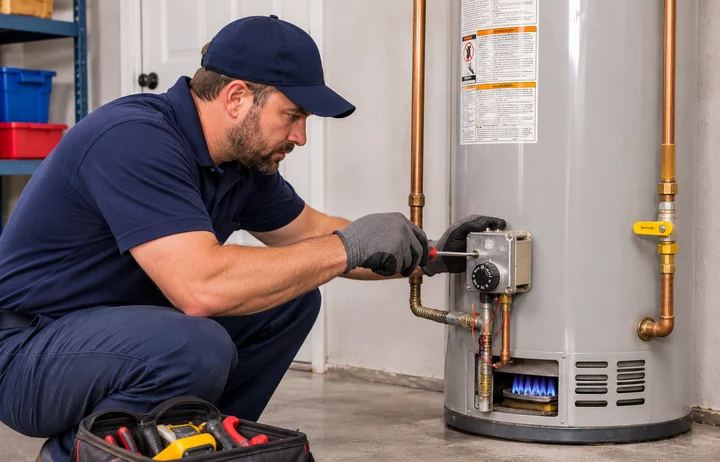 05
For gas-fired equipment, a professional can evaluate symptoms involving poor heating, ignition controls, burners, and safe venting before recommending appropriate work.
Learn About This Service →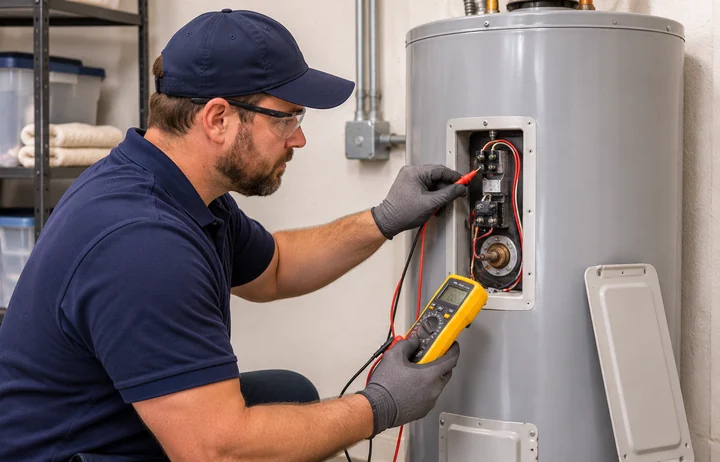 06
Electric water heater service may involve heating elements, thermostats, power-supply conditions, or temperature-control problems. Electrical testing and repairs belong with qualified professionals.
Learn About This Service →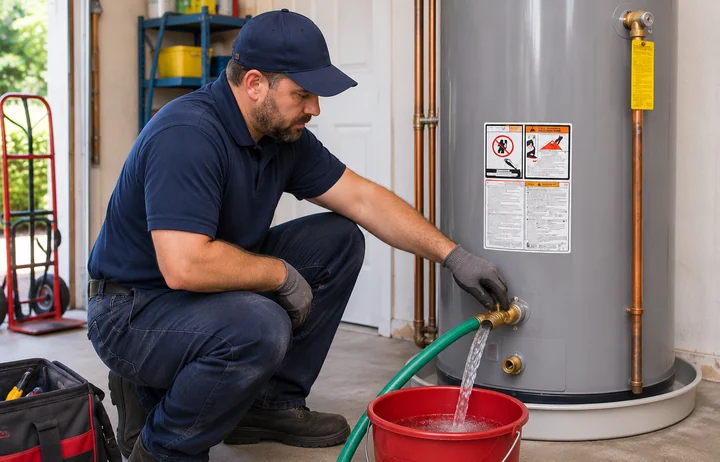 07
Routine care can include checking connections and tank condition, reviewing sediment concerns, and performing flushing or tankless descaling when appropriate for the equipment.
Learn About This Service →Call to discuss tankless equipment selection, installation requirements and service availability with our team.