 01
Water Heater Replacement
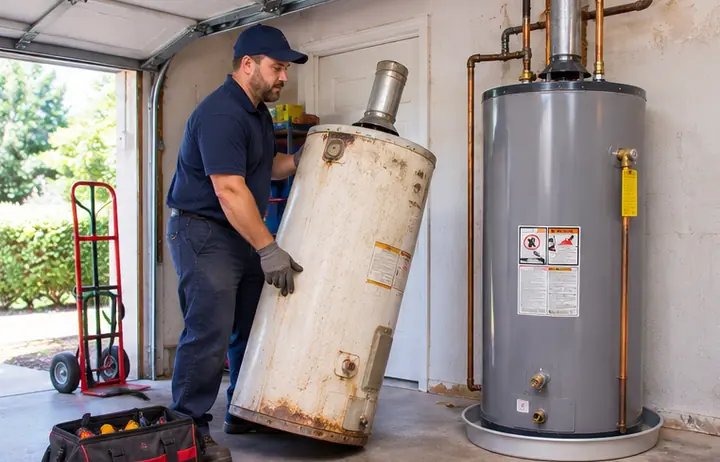
Equipment replacement may be appropriate for a failed vessel or a system demonstrably unable to meet demand; first verify household or building usage.
Learn About This Service →
If hot water does not return between regular uses, the heater deserves a check. Water Heater Repair Pros provides repair support for Lawrenceville, GA water heaters, from conventional tanks to tankless models. Testing the heating system can distinguish weak performance from a capacity mismatch.
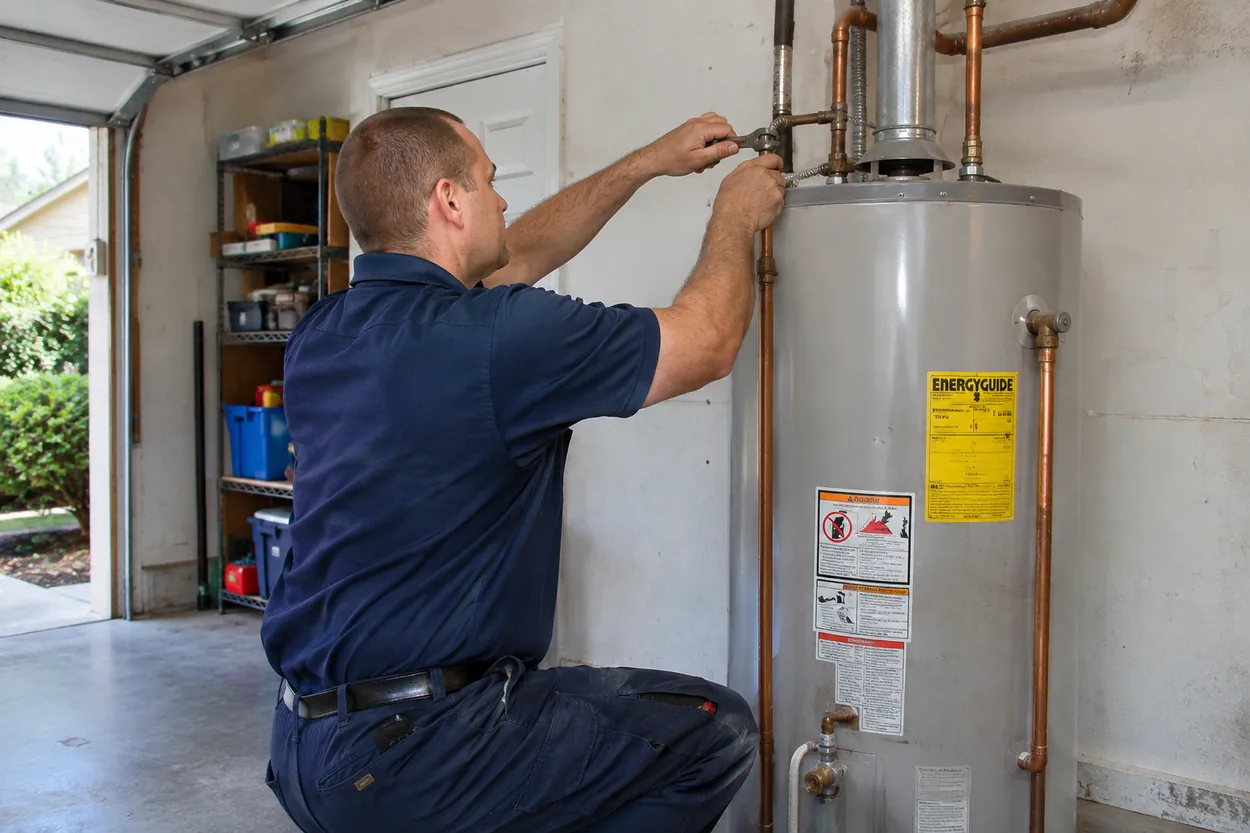
Water heater repair in Lawrenceville, GA should begin with an accurate demand pattern: does the first shower work but the third turn cold, or does every fixture receive lukewarm water from the start? A technician can use that pattern to distinguish capacity limitations, failed recovery components and mixing-system faults.
Lawrenceville addresses range from single-family homes to buildings with shared or separately metered hot-water equipment. Property type changes who may authorize access and whether the heater serves one unit or more than one. ZIP 30042 and 30049 are mailing-only ZIPs, while 30043, 30044, 30045 and 30046 accept street delivery; none of these postal identifiers establishes a contractor’s coverage. Before authorizing work, verify the heater location, owner or manager approval when needed and actual hot-water demand.
The timing of a Lawrenceville hot-water complaint can point toward a supply capacity issue or a true component failure.
Hot water that lasts through one shower but not several consecutive showers may reflect tank size, incoming cold-water temperature or failed recovery elements.
A heater that remains lukewarm even after a quiet period can have a thermostat, burner, electrical supply or sensor failure.
One apartment fixture going cold while another stays hot suggests a local mixing device, shared riser or building distribution issue.
A tankless unit showing temperature dips when several taps open may exceed its practical flow capacity at the required temperature rise.
Recurring puddles by a storage unit can come from plumbing joints, relief discharge or a failing vessel; water location needs careful tracing.
A sudden hot-water pressure drop with normal cold flow can involve a hot shutoff, outlet fitting, scale restriction or fixture valve.
Unexpectedly scalding water requires careful temperature-control and mixing protection assessment, not a higher or lower setting chosen without testing.
Record how many fixtures are running when temperature drops, whether the building has a shared system and the unit or suite that is affected.
Call About Water Heater RepairCapacity, equipment repair and distribution work need different scopes; the seven service options should follow measured findings.
01Equipment replacement may be appropriate for a failed vessel or a system demonstrably unable to meet demand; first verify household or building usage.
Learn About This Service →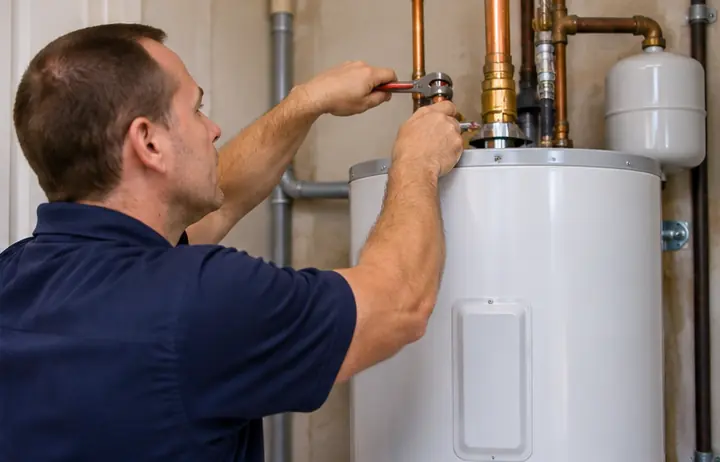 02
Installation work should address equipment footprint, safe drainage, expansion, gas or electrical capacity and permissions for shared-building areas.
Learn About This Service →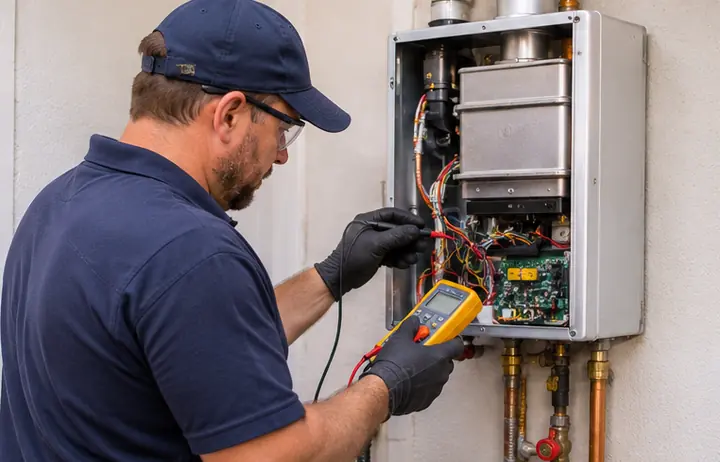 03
Tankless repairs may target sensors, flow restrictions, error-code causes or heat-exchanger faults while evaluating simultaneous draw.
Learn About This Service →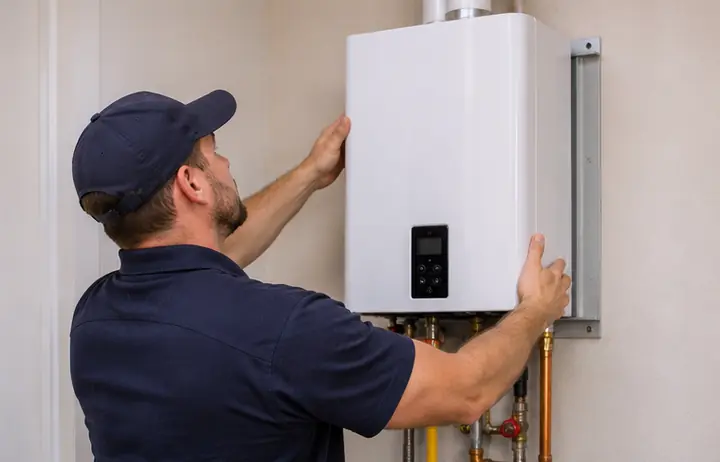 04
A tankless conversion needs a realistic fixture count, temperature-rise calculation and energy/venting assessment rather than a marketing capacity number.
Learn About This Service →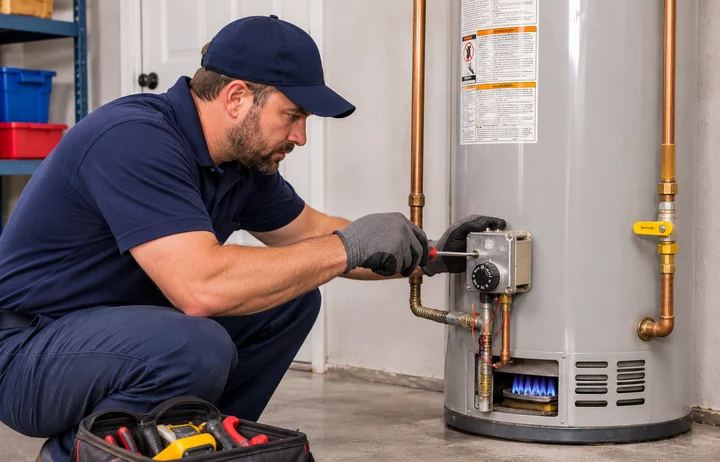 05
Gas water-heater repair should inspect burner control, safety interlocks, combustion-air and venting conditions under manufacturer requirements.
Learn About This Service →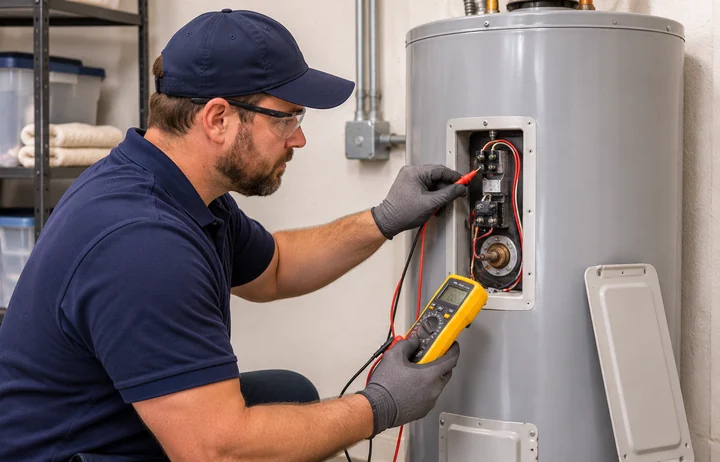 06
Electric tank work can test individual elements and thermostats after safe isolation, especially when recovery after a first shower becomes unusually slow.
Learn About This Service → 07
Routine maintenance can document temperature control, accessible valve condition, sediment symptoms and tankless screens without promising any fixed service life.
Learn About This Service →The number of simultaneous fixtures matters most when equipment selection and heat recovery are evaluated together.
Gas tank heaters store a finite volume and replenish it at a model-specific firing rate; back-to-back demand should be compared to published recovery performance.
Electric storage tanks may show partial heating when one element fails, creating a recognizable slow-recovery complaint.
Tankless equipment has maximum flow at a stated temperature rise; several showers can exceed that output even when the unit is not defective.
Hybrid heat-pump heaters can recover differently by mode, so examine settings, airflow and actual demand before diagnosing weak performance.
Lawrenceville repair-versus-replacement decisions should compare real demand, measured heating performance and equipment condition.
If a storage vessel is sound and a thermostat, heating element, valve or accessible part has failed, repair may restore normal recovery. For multi-unit buildings, also check whether the proposed work is within the responsible party’s system.
A leaking internal tank, extensive corrosion or persistent inability to meet realistic simultaneous usage may warrant replacement or resizing. Confirm electrical service, gas line, venting, available space and code approvals before deciding capacity.
The Lawrenceville invoice can depend on whether diagnosis involves one apartment, a detached house or shared building equipment.
A single failed part and an accessible domestic tank generally differ from work on restricted shared mechanical rooms.
Permission, isolation procedures and coordinating service for multiple occupied units can affect scheduling and the approved work window.
Upsizing storage or tankless equipment may require separate electrical, gas, venting or distribution changes.
Permit, disposal and inspection requirements follow the actual parcel and proposed scope rather than a PO Box postal code.
Request an itemized explanation of the measured failure, component labor, building-access requirements and any capacity upgrade.
The best Lawrenceville request describes both the first successful hot-water draw and the demand level where performance fails.
Provide the complete street-delivery worksite address (30043, 30044, 30045 or 30046 when applicable), building or unit number and the person authorized to approve access.
Note the water-heater fuel, rated storage or tankless capacity, approximate number of simultaneous fixtures and any visible fault codes.
Check the provider’s qualifications, insurance, building-access rules and actual service availability before committing to repair or replacement.
Call (833) 423-3192 with the Lawrenceville street address and the number of fixtures affected, not only the six-ZIP mailing list.
Call (833) 423-3192A good Lawrenceville diagnosis should determine whether a system is broken, undersized, improperly mixed or serving more fixtures than expected.
Our licensed plumbing professionals perform water heater service within the scope of their qualifications. Identify who owns and services the heater, especially where an apartment or commercial building uses common equipment.
Our service professionals are insured for their work. Compare temperature at a single tap with measurements during simultaneous use before selecting replacement capacity.
Explain parts repair versus sizing changes using measured performance rather than assumptions about household size.
Review safe relief-discharge, expansion and temperature controls regardless of heater type.
Our team has completed real water heater service jobs in Georgia. Confirm permissions and applicable Gwinnett County or municipal requirements for the actual property.
Our team serves Lawrenceville and other Georgia communities; availability depends on the physical service address. Use verified street delivery and building-entry instructions rather than an unrelated post-office box.
Looking for water heater repair in the Lawrenceville area? You can review the listed ZIP codes, including 30043 and 30044, and find linked communities such as Duluth and Suwanee below. Before requesting service, provide the physical street address so availability can be checked accurately.
30042 and 30049 are PO Box codes. Street delivery uses 30043, 30044, 30045 or 30046, depending on the address.
The draw may exceed stored capacity or recovery rate. A failed heating element or control can also slow recovery; compare demand against measured performance.
Yes. Its actual hot-water flow at the required temperature rise may be lower than combined fixture demand even when the heater is working properly.
That depends on ownership and building rules. Confirm the responsible manager or owner and who may access shared mechanical equipment.
No. Postal boundaries and municipal boundaries differ. Determine location and permitting authority from the parcel or street address.
Not automatically. Test elements, thermostats, power and actual demand before concluding the pressure vessel needs replacement.
Tell the provider which taps run together, how long heat lasts, whether a shared heater is involved and the full worksite address.
Explain how many fixtures draw hot water at once and supply the actual Lawrenceville worksite address for capacity and repair diagnosis. Call (833) 423-3192 for next steps.