 01
Water Heater Replacement
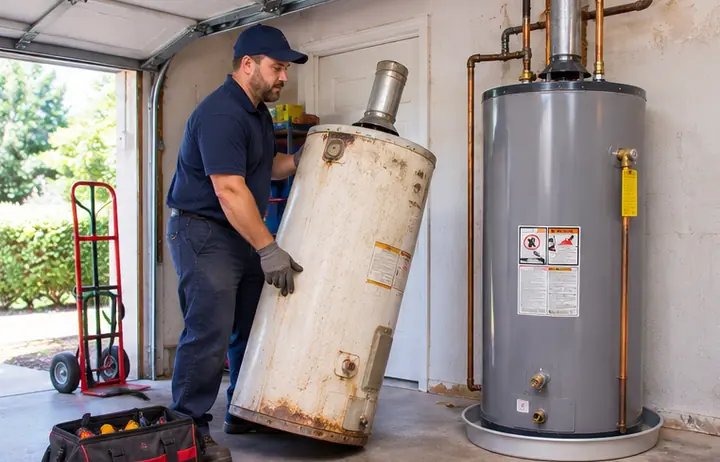
When an aging, severely corroded, or leaking heater is no longer a sensible repair candidate, replacement planning should consider tank capacity, fuel type, connections, and hot-water demand.
Learn About This Service →
Water Heater Repair Pros provides gas water heater repair across Georgia for homes and businesses. Our team diagnoses heating, ignition and venting concerns with safety-focused service and clear recommendations.
Our technicians are licensed and insured. Service availability, findings, repair scope and charges are confirmed by our team.
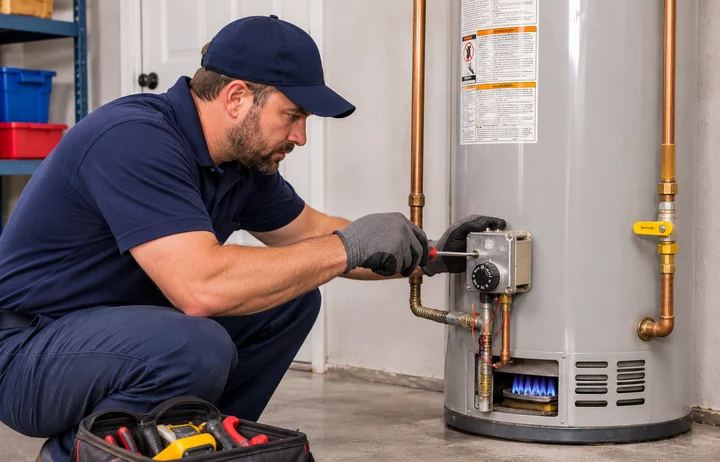
Gas water heaters heat stored water using a fuel-fired burner controlled by a thermostat and safety devices. Their components differ by model, so finding the reason for lost hot water requires more than assuming a pilot light or burner part has failed.
Gas water heater repair in Georgia can involve a natural-gas or, where applicable, a propane storage water heater. Common service requests include no hot water, a pilot that will not stay lit, repeated ignition failure, temperature changes, unusual sounds and water collecting near the tank. A symptom may have more than one cause. A professional should distinguish a serviceable control problem from a failed tank or unsafe combustion condition.
Water Heater Repair Pros provides water heater repair and related services across Georgia. Our team evaluates equipment issues, discusses repair options and schedules service.tankless water heater repair information may be the more relevant starting point.
Describe what the heater is doing, when the problem started, and whether any warning light or display code appears. These observations can help a service professional prioritize the right checks without requiring you to open gas components or attempt a repair.
The heater may not be firing, its controls may have interrupted operation, or the stored hot water may be exhausted. Check whether the issue affects only the hot-water supply before calling, but do not disassemble the burner.
Some older gas heaters use a standing pilot; newer models may use electronic ignition. A pilot that repeatedly goes out could reflect a flame-sensing, control or combustion issue, and repeated relighting is not a substitute for diagnosis.
A heater that clicks without lighting or shuts down before reaching temperature may have problems involving ignition, sensing, gas controls or the conditions required for safe combustion.
Temperature swings or slow recovery can result from a control issue, burner operation, incoming supply conditions or demand that exceeds the heater’s capacity.
Rumbling or popping can occur when sediment accumulates around heated surfaces. Unusual sounds do not by themselves identify a burner problem or mean the whole heater requires replacement.
Moisture may come from a connection, fitting, relief-valve discharge or the tank itself. Ongoing leakage near fuel controls or wiring needs prompt professional attention.
If you notice a gas odor or a carbon monoxide alarm, leave the area and contact emergency services or the gas utility from a safe location. Do not use the website repair line as the first emergency response.
Call for Non-Emergency Gas Heater ServiceGas-fired storage heaters include components that control fuel flow and verify appropriate ignition. The exact arrangement varies by manufacturer, fuel type and whether the unit uses a standing pilot or electronic ignition. These are examples of faults a qualified technician may investigate, not homeowner repair instructions.
Some standing-pilot models use a thermocouple or related safety sensor to confirm the pilot flame is present. Other designs use different flame-sensing or ignition electronics. A repeated shutdown can involve sensing or the flame conditions, not necessarily the sensor alone.
The gas control regulates burner operation and may incorporate temperature control and safety functions. A malfunctioning control can affect ignition or heating, but a professional should check the entire system before deciding whether a valve requires replacement.
Pilot assemblies, igniters, ignition modules and associated connections differ between heater models. The right diagnostic approach depends on whether the heater is designed with a standing pilot, spark ignition or another system.
Burner performance can be affected by fouling, improper combustion conditions, restricted combustion air or another equipment fault. Problems around the burner should be assessed without homeowner dismantling or adjusting fuel components.
Minerals can collect at the bottom of a storage tank, contributing to noises or uneven heat transfer. Sediment may coexist with an unrelated heating fault, and maintenance suitability depends on equipment condition.
For older equipment, the key distinction is whether the problem comes from a replaceable part or from tank deterioration, unsafe conditions or repeated failures. See water heater replacement for equipment-selection and replacement considerations.
A service visit starts by identifying the heater’s manufacturer, model, fuel type and operating symptoms. The technician can assess visible tank condition and connections, determine whether a standing-pilot or electronic-ignition system is installed, and consider the manufacturer’s instructions when evaluating the fault.
Explain whether hot water disappears completely, recovery is slow, the pilot repeatedly goes out, or a code or indicator appears. Have the model and approximate equipment age ready if known.
The professional evaluates the appropriate temperature-control, ignition, flame-sensing and safety components for that model and checks how the system responds when heat is requested.
Safe combustion depends on suitable fuel supply, combustion air and exhaust conditions. The professional may inspect relevant venting and installation conditions as part of diagnosis.
After identifying the problem, our team can explain the proposed repair, whether replacement is a better option, and how the work and charges will be communicated.
Do not repeatedly reset or relight equipment that shuts down, and do not bypass safety devices. The goal of diagnosis is to identify the actual cause rather than replacing parts by guesswork.
Fuel-burning water heaters must handle combustion products safely. Depending on the model, the installation may use atmospheric venting, induced draft or a power-vent system. Venting, combustion air, clearances and exhaust routing should be appropriate for the specific equipment and applicable requirements.
If you smell gas or hear a suspected gas leak, leave the building immediately. From a safe location, call 911 and your gas utility or emergency service. Do not operate switches, lights, phones or appliances inside the affected area or attempt to find the leak yourself.
A carbon monoxide alarm or symptoms suggesting exposure require immediate action. Get everyone into fresh air and call emergency services from a safe place. Carbon monoxide cannot be identified by smell; a repair appointment is not a replacement for emergency response.
Blocked or disconnected vents, soot, unusual burner appearance and repeated shutdowns are reasons to stop using equipment until it has been professionally assessed. Qualified professionals should evaluate combustion and venting; homeowners should not adjust gas pressure, modify vent connectors or defeat safety controls.
Some problems can be resolved by correcting a serviceable component or installation issue; others may require major work or replacement of the appliance. The right decision comes from verified findings and the heater’s model-specific parts and service instructions.
Where appropriate, a technician may service or replace model-compatible ignition, pilot, flame-sensing or related control components after confirming the underlying fault.
A verified control failure may involve replacement of an approved component. Control issues must be distinguished from fuel, combustion or sensor faults before work proceeds.
The professional may identify an equipment defect, obstruction, improper air or venting condition, or component requiring suitable servicing. Combustion safety takes priority over restoring operation.
Accessible fittings or other serviceable connections may be repair candidates. A leaking or severely corroded storage tank is a different issue and often requires replacement rather than a patch.
Confirm whether a proposed visit includes diagnosis alone or additional repairs, what parts are available for your model, and whether follow-up work is needed. Avoid relying on a generic repair checklist to decide whether gas equipment is safe to operate.
Repair may be appropriate when the tank remains sound and the problem is traced to a serviceable control, ignition assembly or other replaceable component. Replacement may make more sense if the tank is leaking, corrosion is extensive, required parts are unavailable, or repeated failures are becoming costly.
The tank appears structurally sound, the fault is clearly diagnosed, compatible parts are available, and the proposed work addresses a specific problem without unresolved safety concerns.
Tank leakage or significant corrosion, repeated major failures, an unsafe or obsolete setup, or costs approaching the value of a suitable replacement may shift the decision.
Age alone does not establish the right decision, and an apparently inexpensive repair should not override a professional safety finding. If replacement is being considered, visit our Water Heater Replacement page for sizing, fuel and removal considerations or Water Heater Installation for installation requirements.
Gas water heater service costs depend on the diagnosed fault, the equipment model and the actual work needed. A phone conversation can help describe the problem, but cannot establish a reliable final repair price without enough information about the heater and its condition.
An intermittent shutdown can require a different inspection than an obvious failed control. Time needed to isolate the true fault influences the scope.
Gas control valves, flame-sensing parts, igniters, burner components and other model-specific parts differ in price and availability.
Exhaust, combustion air or fuel-related safety findings may require work beyond an ordinary component replacement.
Tight utility closets, corrosion, difficult connections or an older heater can affect access and what can be serviced appropriately.
A targeted component repair is not the same job as removing and installing a new heater. Different equipment and labor are involved.
Before approving work, ask our team what the assessment includes, what was found, what the proposed work covers and how charges will be explained. Water Heater Repair Pros does not publish unverified statewide flat gas-heater repair rates.
Georgia’s current state minimum construction codes include the 2024 International Plumbing Code and 2024 International Fuel Gas Code with 2026 Georgia amendments. Requirements affecting a particular repair, replacement, venting change or installation may also depend on the project and the local authority having jurisdiction. A qualified professional should determine which requirements apply.
Fuel connections, combustion components and venting must be evaluated and serviced by qualified personnel according to applicable requirements and manufacturer instructions.
A gas odor or carbon monoxide alarm requires evacuation and emergency contact from a safe location. Do not continue operating a suspect heater merely to see whether the problem returns.
Repair scope and local rules determine which permits or inspections may be required. Our team can explain the arrangements for the actual property and job.
For current statewide references, see the Georgia Department of Community Affairs construction codes. This page is general customer information, not a substitute for a qualified onsite evaluation.
Water Heater Repair Pros provides gas water heater repair for Georgia homes and businesses dealing with heating failures, pilot or ignition issues and other equipment problems. Our technicians discuss the symptoms, water heater type and street address before confirming local service availability and the appropriate next step.
Call (833) 423-3192 with your Georgia ZIP code, gas heater model if known, and a description of the heating or ignition problem. Our team can discuss service availability and the next steps for professional assessment.
Do not see your city? Browse the complete Georgia Service Areas directory or call with your street address to discuss local service availability.
Need help with a gas water heater? Describe the symptoms and equipment type so our team can discuss the right next step.
Call About Gas Water Heater RepairA gas storage heater may stop heating because its ignition, flame-sensing, gas control or other safety system is not allowing the burner to run. Tank condition, temperature settings and demand can also affect the result. A qualified professional can identify the actual cause before a repair is proposed.
On a standing-pilot model, a pilot that will not stay lit can involve flame sensing, the pilot assembly, a gas control or combustion conditions. Some newer models use electronic ignition instead of a standing pilot. Do not repeatedly relight or bypass safety devices when the heater shuts down.
A professional may determine that an approved model-compatible gas control requires replacement. A suspected gas control problem should first be diagnosed against other possible causes. Work involving gas controls must follow the equipment maker’s instructions and applicable safety requirements.
Leave the building immediately. Do not use switches, equipment, lights or a phone inside the area or attempt to locate the leak. From a safe place, call 911 and your gas utility or emergency service. Do not re-enter until emergency personnel say it is safe.
That depends on the source of the leak. Some fittings or serviceable connections may be repairable, while a leaking or severely corroded storage tank typically calls for replacement. A professional should determine the source and whether the heater is safe to use.
Replacement may be the practical option when the tank leaks, corrosion is severe, parts are unavailable or repeated repair costs are high relative to suitable new equipment. A diagnosed, replaceable control fault in an otherwise sound tank may instead be a reasonable repair candidate.
Compare related water-heater services or return to the Georgia water heater repair homepage for information about an existing hot-water problem.
01When an aging, severely corroded, or leaking heater is no longer a sensible repair candidate, replacement planning should consider tank capacity, fuel type, connections, and hot-water demand.
Learn About This Service →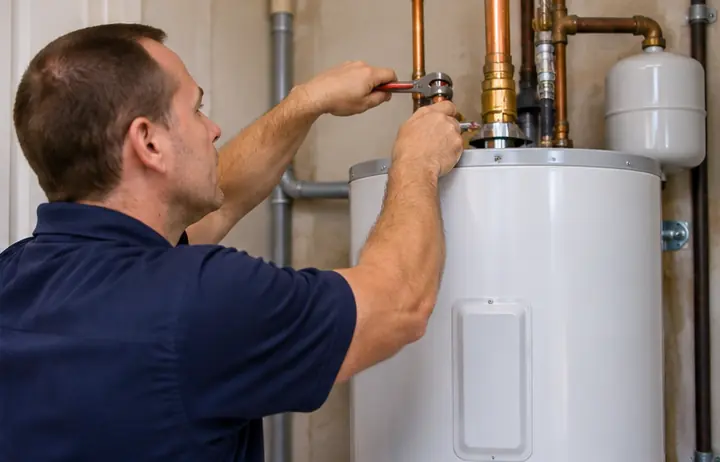 02
Installation for a new property, a renovated space, or a different equipment setup requires appropriate sizing, location planning, and checks of the available plumbing and utilities.
Learn About This Service →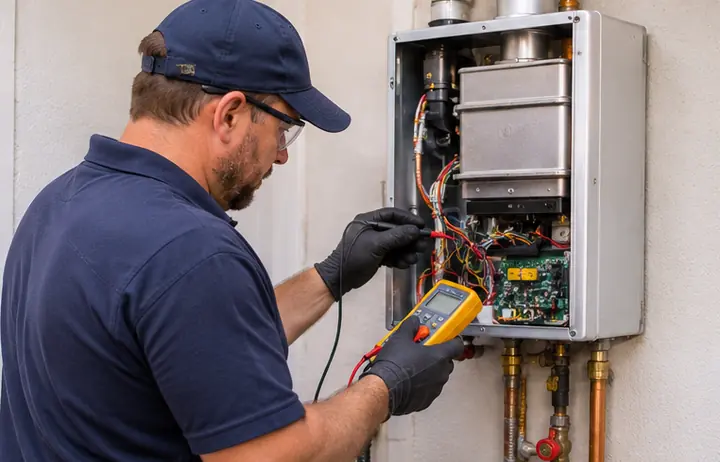 03
On-demand water heater problems may involve flow sensors, mineral buildup, error codes, ignition, controls, or other model-specific faults that need careful diagnosis.
Learn About This Service →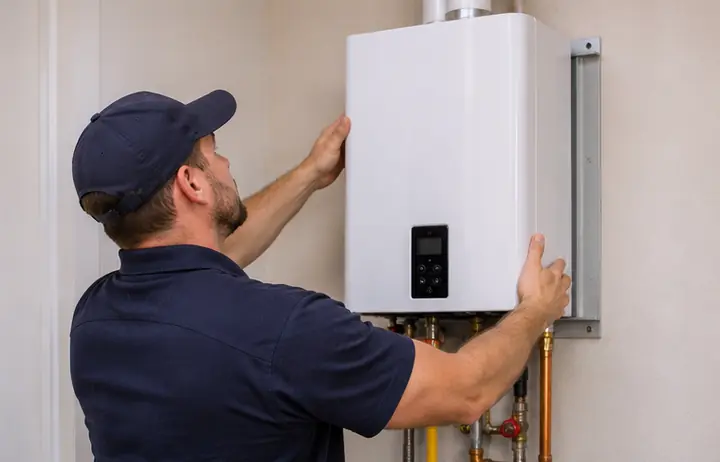 04
Tankless equipment selection depends on the hot-water flow needed at the property, required temperature rise, and whether existing gas, electrical, and venting systems are suitable.
Learn About This Service →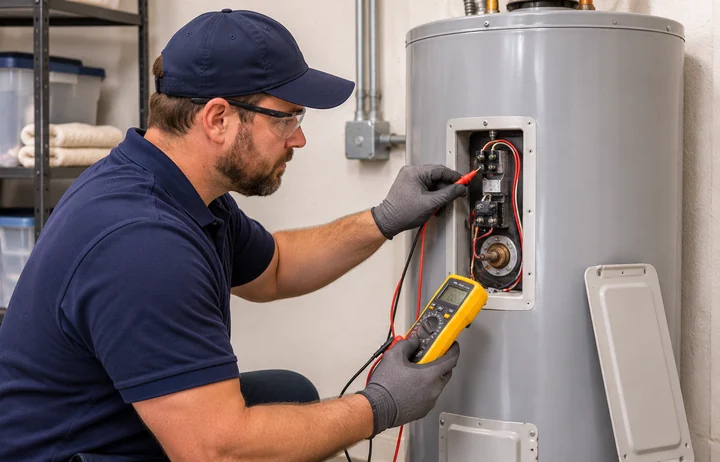 06
Electric water heater service may involve heating elements, thermostats, power-supply conditions, or temperature-control problems. Electrical testing and repairs belong with qualified professionals.
Learn About This Service →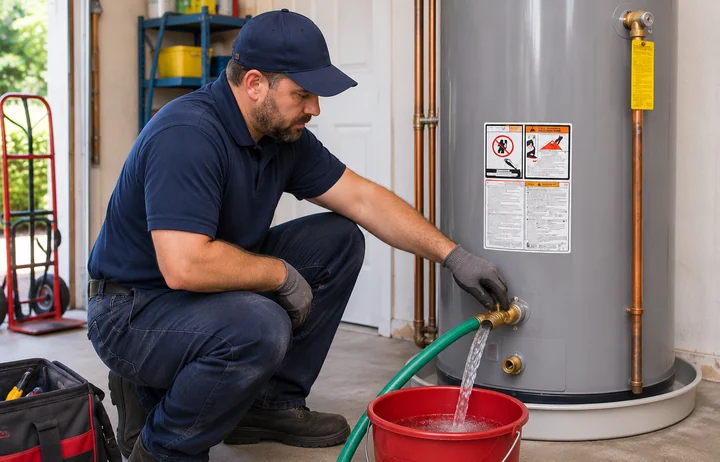 07
Routine care can include checking connections and tank condition, reviewing sediment concerns, and performing flushing or tankless descaling when appropriate for the equipment.
Learn About This Service →Call to describe your gas water heater problem and discuss service availability with our team.