 01
Water Heater Replacement
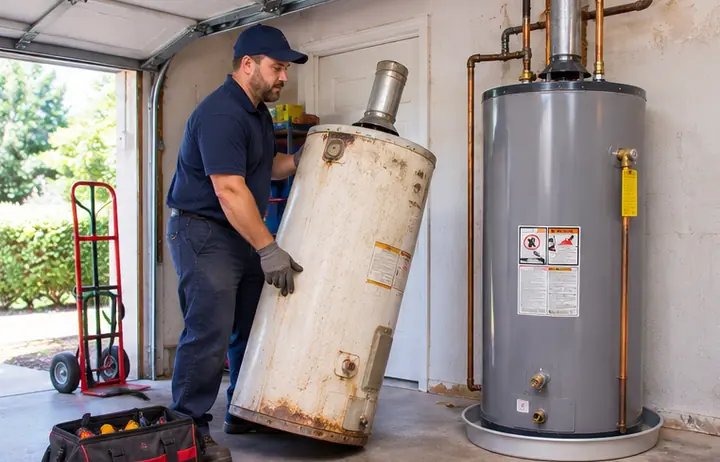
A verified rusting or perforated tank vessel may require replacement; discoloration from the upstream supply does not by itself justify a new heater.
Learn About This Service →
Rust-colored hot water or rumbling from a Rochelle storage tank can be unsettling and may need investigation. Water Heater Repair Pros assesses the unit and recommends service based on its condition. Tell us whether the trouble is constant or intermittent.
Rust-colored water is not proof that a Rochelle heater has reached the end of its life. Compare cold and hot taps, note whether a local supply interruption preceded the color change and check where the discoloration appears first. The answer can point toward incoming water, hot piping or the vessel.
ZIP 31079 is listed for Rochelle in Wilcox County, but the source of water for each building must still be verified. A rumbling tank or stained water requires a record of the heater’s age and condition, rather than assumptions from the postal label.
Deposits, corroded fittings and upstream water disturbances can create overlapping symptoms. Distinguishing a structural leak from noise caused by normal heating is critical before flushing or replacement. Review the common scenarios below as a guide to questions a trained professional may ask.
If only hot taps discharge brownish water, an aging tank or hot-water pipe may deserve inspection. If cold taps also change color, ask the supplier about a recent disturbance before authorizing a heater replacement. A proper diagnosis follows the actual water path.
Seeping from a drain connection may be repairable while moisture originating through a tank seam raises concern about vessel corrosion. A professional should identify the first leak point without relying only on the floor puddle location.
Rumbling in a heated tank can result from water moving through deposits near its heating surface. The noise may justify a manufacturer-compatible maintenance review, but a tank with extensive corrosion should not be aggressively flushed without assessing its condition.
A hot-only odor or color complaint is different from alternating hot and cold at every tap. For fluctuating temperature, evaluate controls and fixtures; for discoloration, compare both supply and tank-side samples using safe procedures.
A gas burner that cycles improperly can leave hot-water storage insufficient despite a full tank. Qualified tests should separate ignition, thermocouple or sensor concerns from ordinary heating sounds; combustion components are not suitable for home trial repairs.
A failed lower electric element can leave some hot water at the top of a tank while recovery is poor. Safe electrical testing should confirm this instead of assuming all rumbling and brown water are caused by the same part.
A tankless unit has no large storage vessel, but scale can restrict heat transfer and produce error messages. Water chemistry, flow readings and manufacturer service instructions matter more than tank-style sediment assumptions.
If water has become rusty, note whether the cold side changes color and what happened before the first occurrence. That information helps a Rochelle repair professional choose between supply, piping and tank tests.
Call About Water Heater RepairFor Rochelle owners, the seven service guides explain when cleaning, targeted part repair, proper installation or full replacement may be considered. Discolored incoming water and failure of the tank shell require different remedies; the actual condition of the vessel comes first.
01A verified rusting or perforated tank vessel may require replacement; discoloration from the upstream supply does not by itself justify a new heater.
Learn About This Service →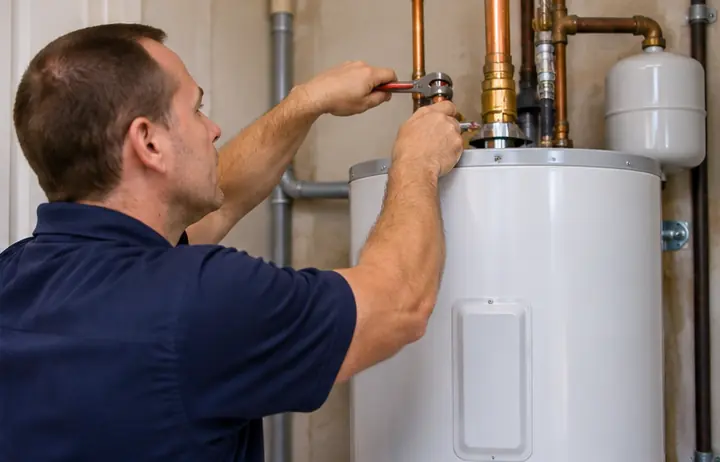 02
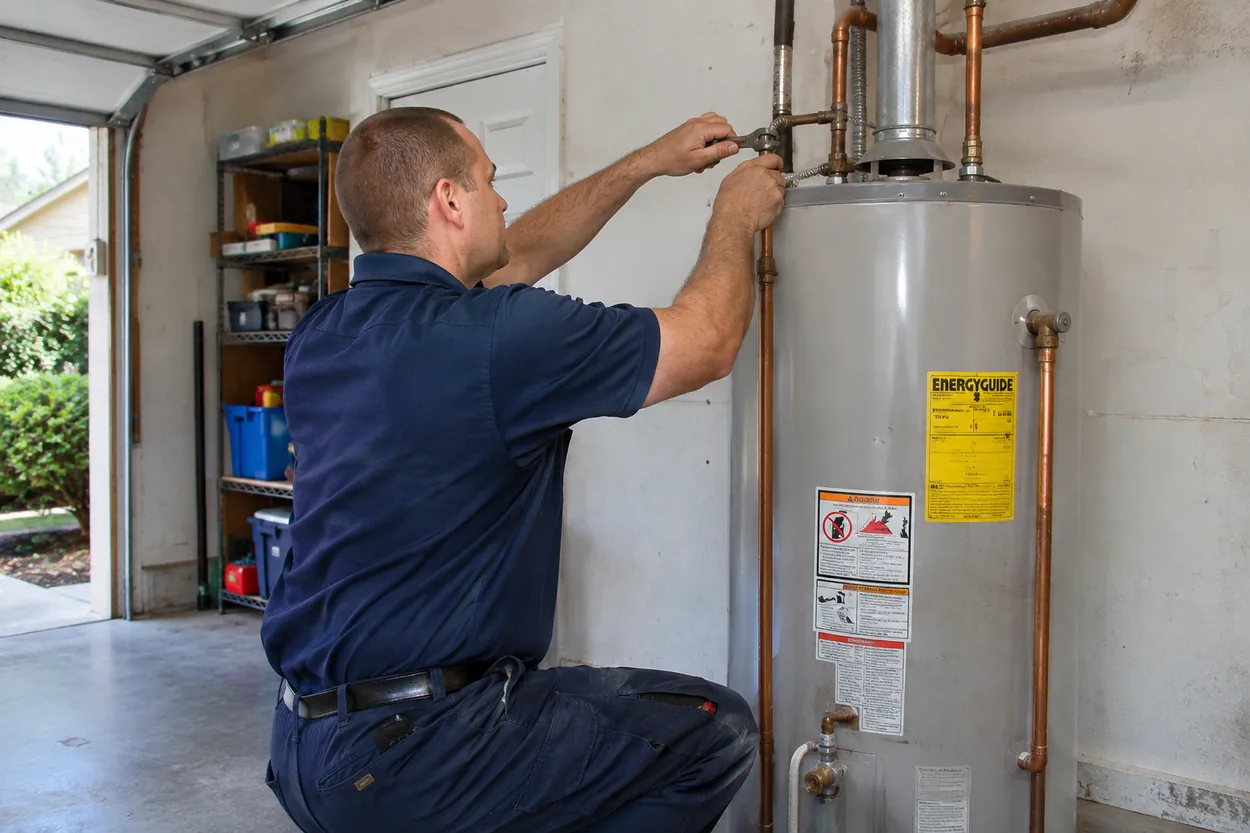
For installation, examine drain pan, accessible isolation, relief discharge and actual inlet water conditions instead of repeating old failing connections.
Learn About This Service →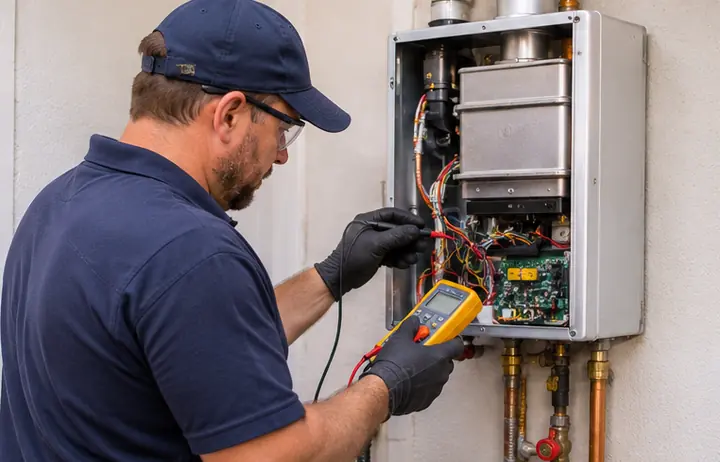 03
Tankless error diagnosis may include scale buildup and flow restrictions, though any cleaning process must match the appliance instructions.
Learn About This Service →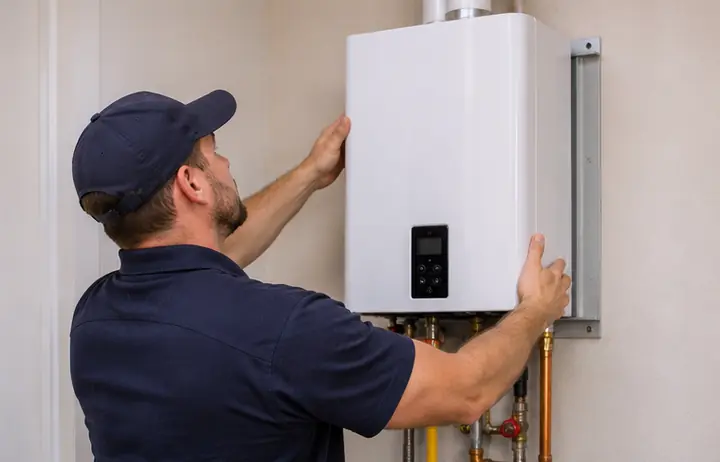 04
Determine whether new equipment is compatible with available fuel, electrical service and realistic household demand before selecting capacity.
Learn About This Service →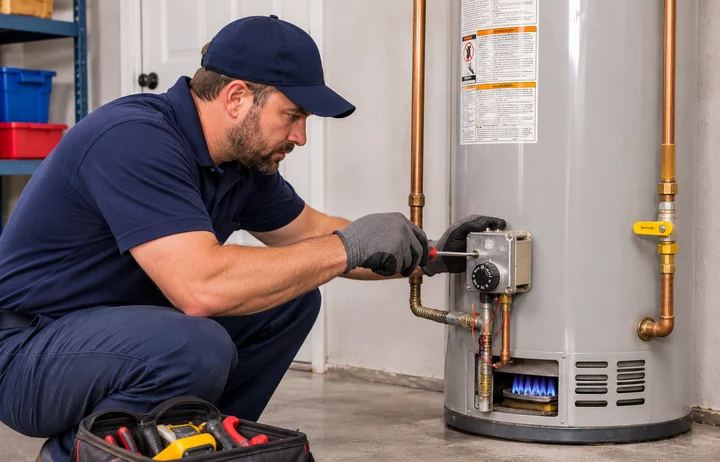 05
Gas burner and venting tests belong to trained personnel; sediment-like noise cannot substitute for safe combustion diagnostics.
Learn About This Service →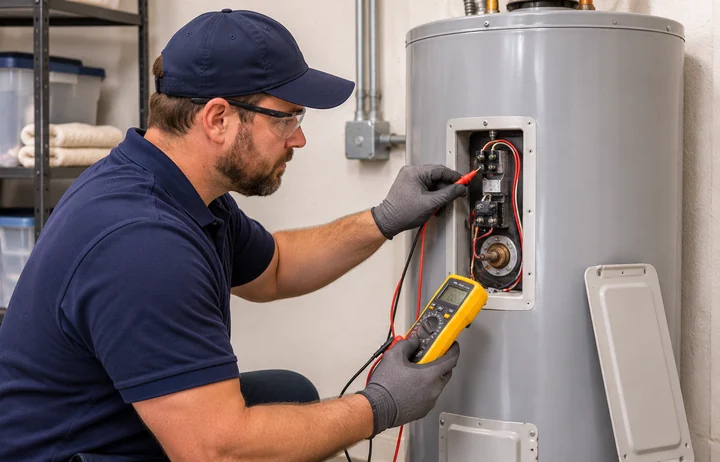 06
Elements and thermostats should be tested under proper isolation, particularly if discolored water is escaping near the electric panel.
Learn About This Service →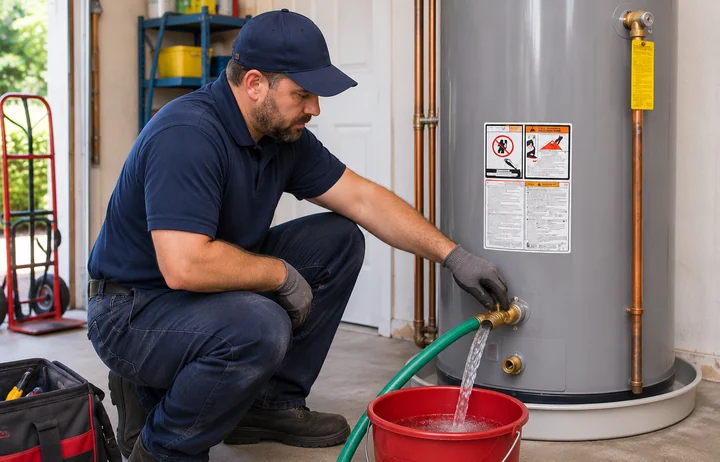 07
Manufacturer-approved flushing, anode inspection and connection checks can support maintenance, but a compromised shell must be evaluated first.
Learn About This Service →A traditional tank stores water and can accumulate deposits, while tankless heat exchangers may scale differently. Gas burners and electric heating elements add separate safety and control systems. Correct equipment identification prevents treating every popping noise as the same failure.
Stored tanks can collect deposits and develop corrosion; age, water source and condition help distinguish serviceable components from a failing vessel.
Tankless equipment may accumulate scale in narrow heat exchangers and should follow model-specific cleaning and error-code procedures.
Combustion and venting must be checked on gas appliances even when the owner’s main complaint is rumbling or water color.
Electric heater elements can be affected by deposits, but electrical diagnosis is separate from water-quality assessment.
A Rochelle tank with a sound vessel might need a valve, control or component repair; an actual seam leak can make further maintenance unsafe. Assess where moisture originates and whether coloration appears on the cold-water side before deciding to install a new cylinder.
A replaceable valve, control or drain fitting on an otherwise sound unit may be repaired after leak origin is verified. Surface coloration alone is not enough to condemn the vessel.
A leaking tank seam, structural corrosion or persistent safety defect supports evaluating a properly sized replacement; compare cold-side supply conditions too.
The price of investigating rusty water differs from the work required to replace a corroded tank. Inspection may include water-source checks, discharge fittings, age and drain access. Explain the diagnostic steps before authorizing flushing or a major equipment purchase.
Determining whether discoloration starts in the utility supply, hot piping or tank can require more than a quick visual check.
Anode-related service, flushing, fittings and a replacement vessel involve distinct labor and material requirements.
Condensing tankless models, gas tanks and electric storage heaters have different inspection steps and parts access.
Restricted drain access, deteriorated shutoffs or equipment in a narrow room can change the allowed work scope and cleanup needs.
A replacement estimate should identify why the storage vessel is unsuitable, not merely cite age or rumbling. If a supply disturbance contributed to discoloration, ask how that condition will be addressed alongside any tank work.
For a Rochelle request, say whether brownish water is present at hot taps only and whether there is any tank noise, odor or seepage. The provider should be able to plan an equipment condition review and identify what additional water-source information is needed.
Give the Rochelle ZIP 31079 worksite address and a contact who can authorize checking both the heater and its water supply.
Report whether only hot water looks rusty, how long it has happened, the heater age and any noises or leaks. State if a water-supply outage preceded the issue.
Confirm availability, expected diagnostics and whether the provider can evaluate suspected corrosion before agreeing to any repair or new equipment.
Keep a note of any recent main-line work or prolonged vacancy. Before a Rochelle appointment is agreed, confirm where the heater is installed and who can approve an inspection of the supply and the vessel.
Call (833) 423-3192A sound assessment compares both sides of the domestic water supply and inspects the tank body before recommending a new unit. Seek clear documentation of corrosion, deposits and relevant safety risks, with the professional’s qualifications matched to the proposed work.
Our licensed plumbing professionals perform water heater service within the scope of their qualifications. Choose a diagnostic approach that compares cold and hot water before blaming the tank for an upstream discoloration.
Our service professionals are insured for their work. Confirm qualifications and insurance for water-heater work and any needed plumbing changes.
A professional should explain whether a repairable fitting, sediment or structural corrosion caused the visible symptom.
Business or rental occupants may require approval before flushing or draining a unit into a shared plumbing system.
Our team has completed real water heater service jobs in Georgia. Gas, electric and tankless systems need model-specific approaches to deposits, controls and heating performance.
Our team serves Rochelle and other Georgia communities; availability depends on the physical service address. A complete 31079 street address and water-source details matter more than assumptions from the postal label.
Looking for water heater repair options in Rochelle, GA? The local ZIP listing includes 31079, while the nearby area links cover Pineview and McRae-Helena. Let our team know the street address and whether your heater is gas, electric, or tankless so the right service request can be discussed.
Corrosion or deposits in the hot-water piping or tank may be involved. Check whether cold water is clear and seek qualified testing.
No. Deposits can create rumbling, but a full condition assessment is needed. A structurally corroded tank has different risks than a maintainable one.
Yes. If cold taps are affected too, investigate incoming water and any utility notice rather than starting with the heater alone.
Do not perform aggressive flushing on a compromised or leaking vessel. A professional should inspect condition and follow manufacturer guidance.
Yes. Hot-water recovery and water color can have different causes; safe electrical testing must not be confused with water-quality diagnosis.
Not solely from the sound. Evaluate deposits, burner condition, vessel integrity and the actual hot-water performance.
Give the 31079 street address, fuel type, appliance age, whether cold taps are clear and when leaks, sounds or color changes occur.
Need help assessing water heater repair in Rochelle, GA? Call (833) 423-3192 with the 31079 physical address and describe discoloration, noise or leakage. Do not loosen hot relief fittings or flush a visibly compromised tank without qualified advice.