 01
Water Heater Replacement
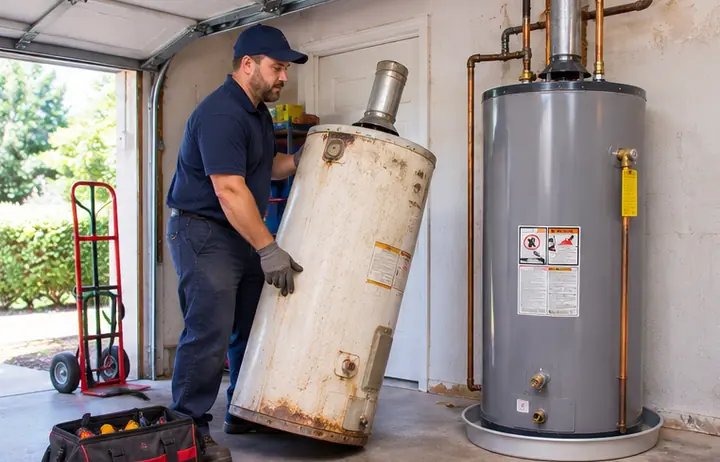
Before choosing a new tank in Quitman, verify that the existing unit has a heating or vessel defect. A shared hot-and-cold pressure loss may be unrelated and would remain after replacement.
Learn About This Service →
When weak hot-water flow is reported in Quitman, temperature and pressure should be checked as separate symptoms. Water Heater Repair Pros helps identify the fault before discussing repair or replacement. We can discuss the problem and the likely next step.
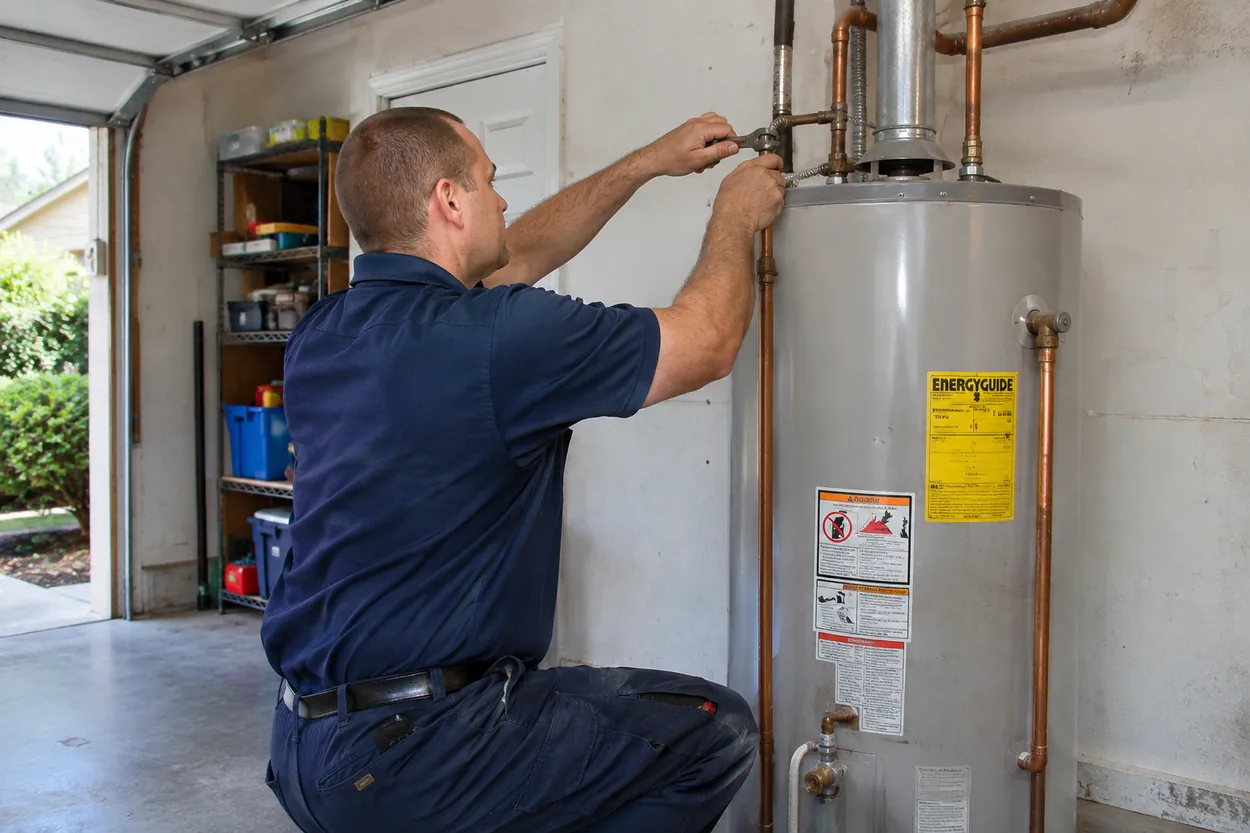
Water heater repair in Quitman, GA starts with observing where the change occurs. Hot water that runs at the correct temperature but reaches the tap in a weak stream calls for a different investigation than water delivered at normal pressure but never heated.
Quitman is the Brooks County seat and its 31643 standard ZIP reaches surrounding rural addresses. The town name used for mailing does not tell you whether a home is on a city connection, community source or private supply.
A Quitman complaint of weak hot water may concern water quantity, water temperature or both. These symptom categories separate supply restrictions, controls, and mechanical tank problems so an owner can report what is actually happening.
A low-volume hot stream is not the same as no heat. Compare cold-side flow at the same fixture, then another tap if safe; a shared loss of pressure can indicate a supply issue. Normal cold pressure with cold hot-side water points toward heating or mixing problems instead.
Pressure complaints sometimes coexist with a wet fitting, but a weak stream does not diagnose a leaking tank. Note whether the water is emerging from an inlet, valve, relief discharge or vessel shell without tightening anything yourself. The location determines the actual repair path.
Clicking or knocking from nearby piping can coincide with changes in supply pressure. Describe whether sound starts when a cold tap closes, rather than assuming mineral buildup is the only explanation.
If the water reaches the correct temperature but comes out slowly, the heater may not be the failed component. If flow is strong yet the water is lukewarm, control or heating capacity becomes more relevant. Report temperature and flow separately rather than treating both as pressure trouble.
A gas heater that will not light requires its own combustion and vent assessment. Low incoming water pressure alone does not justify manipulating a pilot, burner assembly or gas shutoff hardware.
An electric heater with normal pressure but consistently cold output may have a failed heating stage or supply issue. If its breaker trips again, leave it off and seek qualified electrical testing.
A tankless system may refuse to activate when a restrictive faucet delivers too little flow. Record which fixtures start the unit and compare their performance before recommending a flow sensor or replacement.
For Quitman customers, active leaks, gas smells, scalding discharge and exposed wiring should be handled as safety problems first. Do not defeat valves, venting or electrical protection to restore hot water.
Call About Water Heater RepairThe seven related statewide guides describe distinct repair and equipment services. In Quitman, a pressure problem should be isolated before it is treated as a reason to replace an otherwise functioning water heater.
01Before choosing a new tank in Quitman, verify that the existing unit has a heating or vessel defect. A shared hot-and-cold pressure loss may be unrelated and would remain after replacement.
Learn About This Service →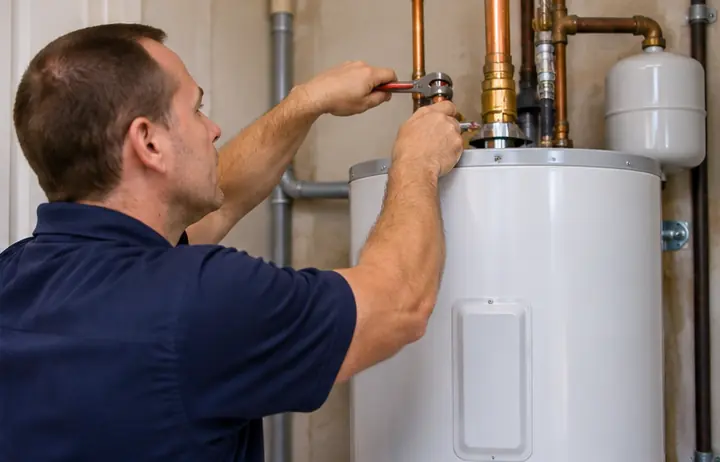 02
An installation plan should account for the actual building supply, accessible shutoffs, pressure protection, and manufacturer clearances. The 31643 mailing label does not determine which utility arrangement serves the site.
Learn About This Service →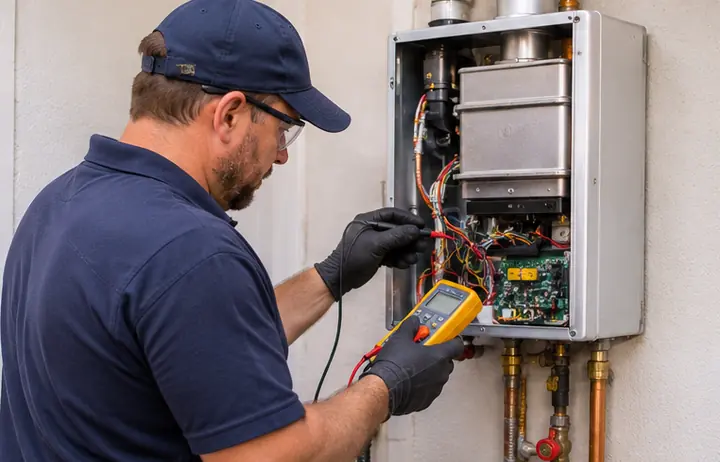 03
If a tankless unit will not fire at low-flow outlets, measure activation conditions and inspect appropriate accessible restrictions. A failing tap or upstream supply can mimic an appliance fault.
Learn About This Service →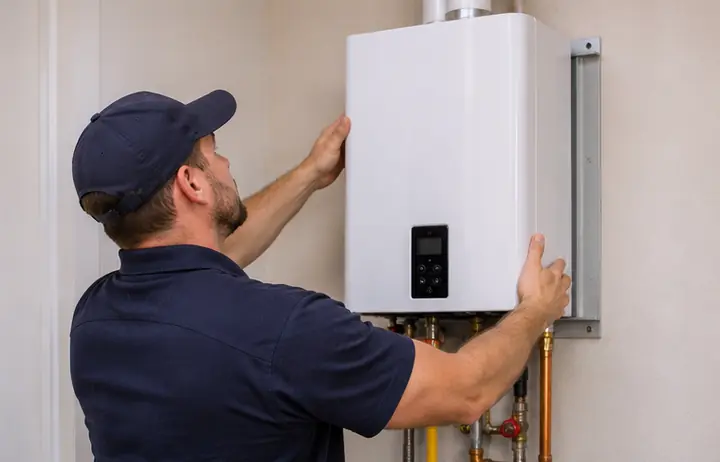 04
Tankless equipment selection requires both available energy input and adequate inlet flow. On a property with a well, the pressure system may need review before sizing and installing equipment.
Learn About This Service →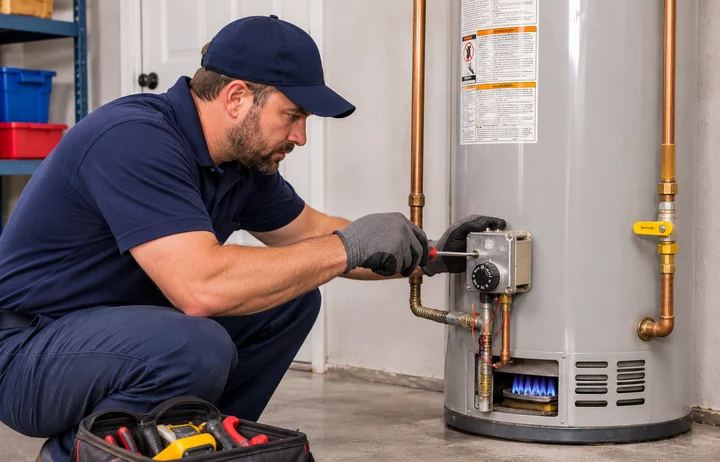 05
A gas storage unit that produces no heat requires qualified ignition and combustion-safety assessment. Changing gas controls cannot correct weak water supply pressure at both the hot and cold taps.
Learn About This Service →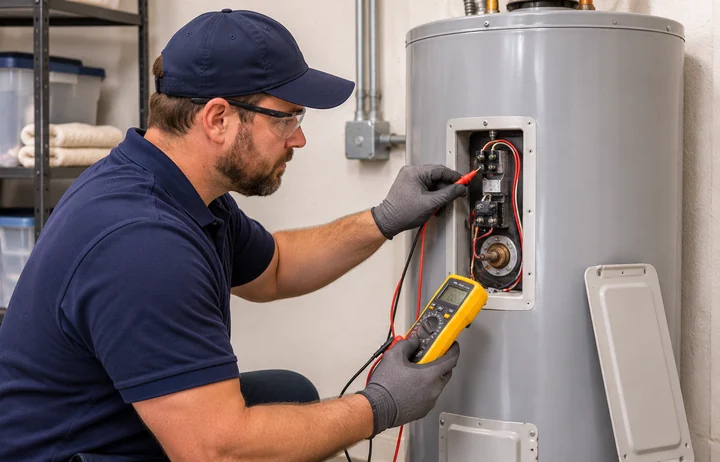 06
Electric element diagnosis is appropriate when supply flow is normal but stored water fails to heat. Qualified technicians should isolate the circuit before verifying thermostats, elements and conductors.
Learn About This Service →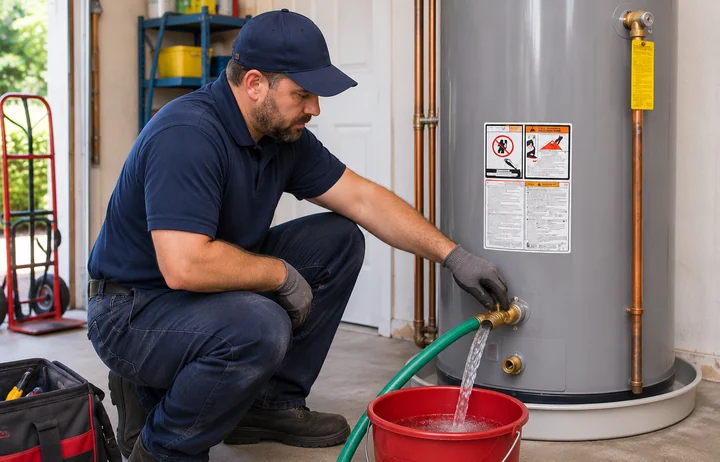 07
Flushing may have a place in scheduled care when the tank and manufacturer permit it. Routine sediment service is not a substitute for resolving a well-pump problem or a closed supply valve.
Learn About This Service →Tank and tankless units respond differently to low inlet flow. A storage tank may contain hot water even while pipes deliver weak pressure, whereas a tankless heater may not activate below its minimum flow.
A tank can heat normally while hot-side pressure is weak because of a restriction outside its heating components. Compare cold flow and hot flow at the same faucet, then another outlet; the pattern determines which part of the system to examine.
Low flow can prevent some on-demand heaters from activating, but it can also reflect a restricted fixture rather than a failed appliance. Report which taps produce hot water and whether flow improves when other outlets close.
A gas burner problem usually changes heating, not ordinary cold-water pressure. If both hot and cold streams are weak, a water-supply condition needs consideration before discussing ignition components; combustion work remains professional-only.
Electric equipment located beside active moisture must not be opened or energized until the hazard is controlled by qualified personnel.
If temperature is correct but flow is poor, the heating equipment might not need replacement at all. Test the actual restriction first and then consider the condition of any affected heater component.
When the water is hot but trickles, inspect the flow restriction rather than selecting a heater replacement from temperature complaints alone. If flow is strong everywhere but water stays cold, the heat source needs separate diagnosis.
Where a pressure system or heater is unsafe, significantly deteriorated or otherwise beyond practical repair, compare replacement options after confirming water-source and site constraints. The final choice should reflect the actual property needs in Brooks County.
Testing a restricted valve or line can be very different from replacing a heating control or corroded tank. A useful estimate lists the isolated fault and explains which water-system components are included.
Testing supply pressure, a fixture restriction or a heater's heating components are different diagnostic scopes. A work proposal should explain where the flow problem begins and why heater parts, if any, are needed instead of replacing an appliance that still heats normally.
An element, damaged conductor, control assembly or full replacement tank represents a different parts scope.
Electric storage and tankless models have different circuit, capacity and diagnostic requirements.
A weak stream at hot and cold taps calls for an accessible water-supply check rather than automatic heater-part replacement. Report whether shutoff valves and the supply arrangement are known, but do not alter unfamiliar controls to test pressure yourself.
A useful work proposal identifies whether testing concerns the supply line, a fixture restriction or a heater component. These problems may feel identical during a shower but require different labor and materials.
When requesting Quitman service, describe hot and cold flow at two fixtures, whether the building uses a well or another supply and what happens to water temperature. Provide the actual worksite address and any equipment access details before a visit is discussed.
Report whether both hot and cold pressure dropped, which fixtures are affected and whether the building uses a private water source if known. Provide the property address and a safe description of any leaks.
Describe the heater type, model if visible, and what happens: hot and cold taps slow at the same time while the heater may still be producing adequately heated water. Mention gas odor, leaks or tripped breakers as possible safety concerns.
Discuss available appointment options and whether someone can authorize access and shutoffs. Do not move gas controls, repeatedly reset breakers or plug discharge pipes while waiting.
A house on a private supply may also require the owner to identify the pump, filter and pressure equipment before the right diagnostic provider can be selected. When you call about a Quitman repair, ask what information is needed to confirm the work location and appropriate next steps.
Call (833) 423-3192A properly defined flow complaint, safe access and an appropriately qualified professional are more useful than an unsupported assurance about fast service. Confirm the precise Brooks County worksite.
Our licensed plumbing professionals perform water heater service within the scope of their qualifications. Ask which Georgia professional license applies to testing and changing the particular plumbing, gas or electrical components. Pressure-system work may require a different specialist from repairing the heating appliance.
Our service professionals are insured for their work. Check the responsible provider’s current insurance and who is authorized to approve work at the Brooks County property. Do not infer coverage from a listing or ZIP code.
A useful specialist should be able to explain why low flow affects the hot side alone or both temperatures, and what observations would establish the actual restriction.
A rented house, shop or small business with shared supply piping may need permission and a planned shutoff before inspection. Identify who controls the system.
Our team has completed real water heater service jobs in Georgia. Differentiate a gas heater, electric tank and tankless appliance before considering any controls; an unrelated well or utility restriction can mimic equipment trouble.
Our team serves Quitman and other Georgia communities; availability depends on the physical service address. Confirm that the complete Quitman street address can be served and obtain any scheduling details directly. The 31643 mailing area alone is not an appointment promise.
If you need water heater service in Quitman, GA, use ZIP 31643 as a location reference and provide your full street address when calling. The linked area pages for Pavo and Adel can help if the repair address lies outside Quitman. Availability is confirmed by property location.
If hot water is hot but slow, a partially closed valve, line restriction or pressure issue may be involved. Check whether cold water is also affected and request appropriate diagnosis.
Yes. Pump pressure and filter restrictions can reduce delivery on both hot and cold sides even when the heater is generating heat.
No. The standard-delivery ZIP includes rural Brooks County addresses beyond municipal limits.
Not without identifying the pressure cause. A functional heater replacement may not restore flow if the restriction is elsewhere.
A fixture or local branch line could be restricted. Comparing other taps helps narrow down the likely location.
Do not open pressurized or heated fittings. A qualified professional can isolate lines safely and test the system.
Provide the real street address, water source, which hot and cold taps changed, heater type and any visible leaks.
Need water heater repair in Quitman, GA? If your issue involves low-flow hot water that may originate upstream of the heater, describe the safe observations you have made and provide the actual property street address. Call (833) 423-3192 to discuss what diagnosis and scheduling options may be available. Postal coverage alone is not a response-time promise.